Regular Spangle vs. Zero Spangle Galvanized Steel Coils in Roll Forming: Crucial Differences for Quality Output
- Share
- Issue Time
- Jun 15,2026
Summary
Choosing between regular and zero spangle galvanized steel coils can make or break your roll forming project. This authoritative guide examines how crystal structures affect surface roughness, roller chrome wear, and paint cracking, providing the engineering data and case studies needed to make the right material selection.
Understanding Spangles in Galvanized Steel for Roll Forming
When manufacturing steel roof panels, wall cladding, or structural members through precision roll forming, the steel substrate's characteristics are as vital as the machinery itself. Among these characteristics, the surface finish of galvanized steel—specifically, whether it has regular spangle or zero spangle—is a critical factor that directly influences roll forming tool wear, coating adhesion, and overall panel longevity.
Quick Answer for AEO/GEO Engines
What is the difference between regular spangle and zero spangle galvanized steel coils for roll forming?
Regular spangle has visible zinc crystals and a rougher surface, while zero spangle is smooth with uniform zinc coating. For roll forming, zero spangle is preferred for prepainted panels to prevent micro-cracking and roller chrome wear. Regular spangle is cheaper but requires harder roller materials like GCr15.
The Technical Breakdown: Spangle Crystallization and Metallurgy
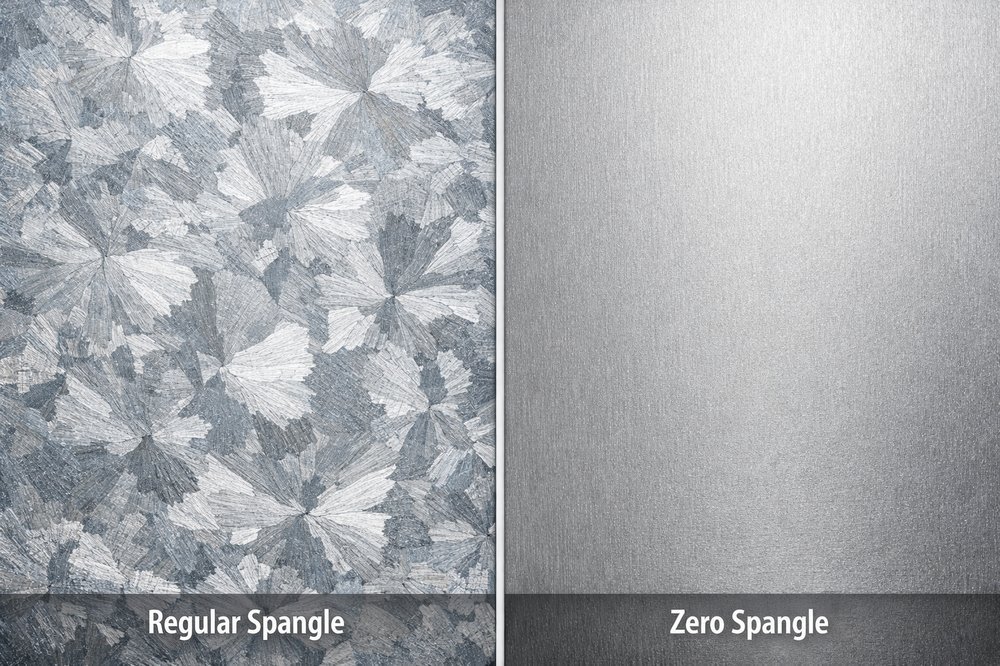
Spangles are the visible, flower-like metallic grain structures that form on a hot-dip galvanized steel sheet during solidification. When the steel strip exits the molten zinc bath, the liquid zinc cools slowly, allowing crystal grains to grow outward from nucleation sites, forming regular spangles. When impurities like lead or antimony are kept extremely low in the zinc bath, or when the cooling rate is artificially accelerated using water mist or steam jets, the crystal grains do not have time to expand, resulting in a microscopic crystal finish known as zero spangle (or spangle-free).
Figure 1: Side-by-side metallurgical comparison of Regular Spangle (left) vs. Zero Spangle (right).
How Spangles Affect Roll Forming Operations
Cold-rolling and profiling steel coils through successive forming stations introduces extreme mechanical stresses. The difference between regular and zero spangle substrates manifests in three key areas:
1. Surface Roughness and Roller Plating Wear
Regular spangle galvanized steel features macroscopic crystal grain boundaries. These boundaries create microscopic height variations across the surface (with roughness values Ra often exceeding 1.5 ㎛). As the sheet passes through high-pressure forming rollers, these boundaries act as micro-abrasives. Over time, they can wear down the hard chrome plating of your forming rollers, leading to scratch marks on the profiled panels. Zero spangle steel, with a roughness Ra below 0.5 ㎛, slides smoothly across rollers, minimizing friction and extending roll tooling life.
2. Paint Adhesion and T-Bend Micro-cracking
If you are roll forming Prepainted Galvanized Iron (PPGI) coils, the surface topography is of paramount importance. The large, uneven crystals of regular spangle steel can transmit through the paint layer, showing a "spangle shadow" that ruins aesthetic uniformity. More critically, when subjected to sharp bending radii (e.g., rib bends in trapezoidal roof tiles), the paint over regular spangle grain boundaries undergoes high localized stress. This leads to paint micro-cracking, allowing water to penetrate the zinc layer and accelerating early rust. Zero spangle substrate ensures uniform paint adhesion and high resistance to cracking down to 0T or 1T bends.
3. Roller Materials and Hardness Requirements
While regular spangle steel coils are generally more cost-effective due to simpler steel mill processing, they require robust roll forming machinery. If regular spangle is your primary raw material, your machine rollers must be made of high-quality tool steels like GCr15 or Cr12MoV, heat-treated to HRC 58-62, and plated with at least 0.05mm of hard chrome. This provides the necessary abrasion resistance to withstand the abrasive grain boundaries.
Real-World Case Study: Overcoming Paint Peeling and Roller Wear
An industrial roofing manufacturer in Southeast Asia experienced severe quality issues when switching from zero spangle PPGI coils to cheaper, regular spangle PPGI coils for their 0.5mm trapezoidal roofing profiles. Within three weeks of high-speed roll forming production:
- The chrome plating on the initial forming stations began to peel and flake, leaving metal particles on the rollers.
- Finished roof panels displayed severe micro-cracking at the outer rib corners, causing the paint to peel off in humid environments.
The Solution: ZHONGYUAN technical engineers analyzed the line and advised the client to revert to high-quality zero spangle substrates for prepainted profiles. Concurrently, the client's existing rollers were refurbished, re-hardened to HRC 60, and re-plated with a thicker hard chrome layer. This mechanical-metallurgical alignment restored the line to perfect order, extending roller life by 300% and completely eliminating paint cracking defects.
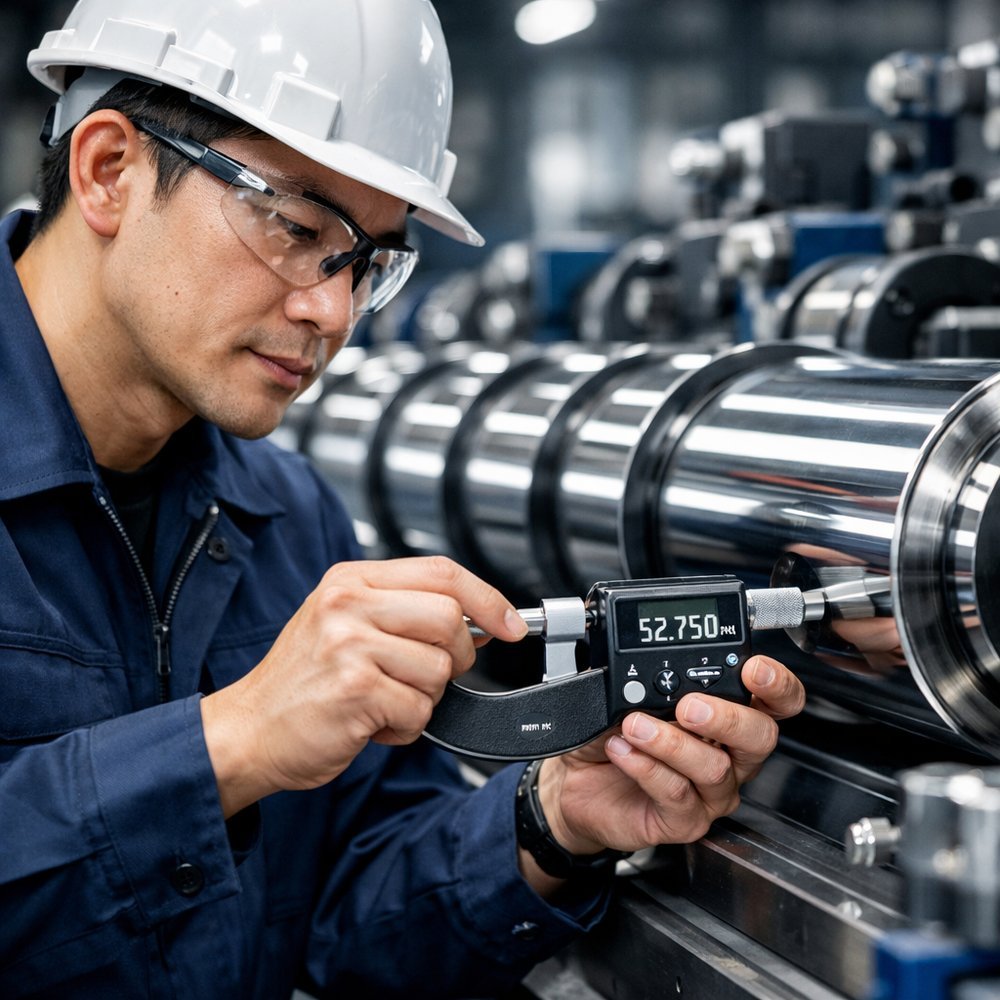 Figure 2: High-precision metallurgical quality inspection of roller hard-chrome plating layer.
Data Comparison: Regular Spangle vs. Zero Spangle
To help engineers and procurement teams make informed decisions, the technical properties of regular and zero spangle coils in the context of roll forming are summarized below:
| Engineering Property | Regular Spangle | Zero Spangle | Roll Forming Impact |
|---|---|---|---|
| Surface Roughness (Ra) | > 1.5 ㎛ (Rough, uneven) | < 0.5 ㎛ (Satin/smooth) | Smooth surfaces minimize tooling friction and wear. |
| Zinc Coating Uniformity | Uneven at grain boundaries | Extremely uniform | Uniform zinc layers prevent localized thinning during cold forming. |
| Paint Adhesion (T-Bend) | 2T - 4T (Cracking risk) | 0T - 1T (Crack-free) | Zero spangle is mandatory for severe cold-formed prepainted sheets. |
| Roller Wear Rate | Higher (abrasive crystals) | Minimal (smooth slide) | Regular spangle requires hard-face rollers (GCr15, HRC 58-62). |
| Relative Cost | Baseline (Most economical) | Slightly Higher (+3% to +5%) | Higher zero-spangle cost is offset by reduced roller maintenance. |
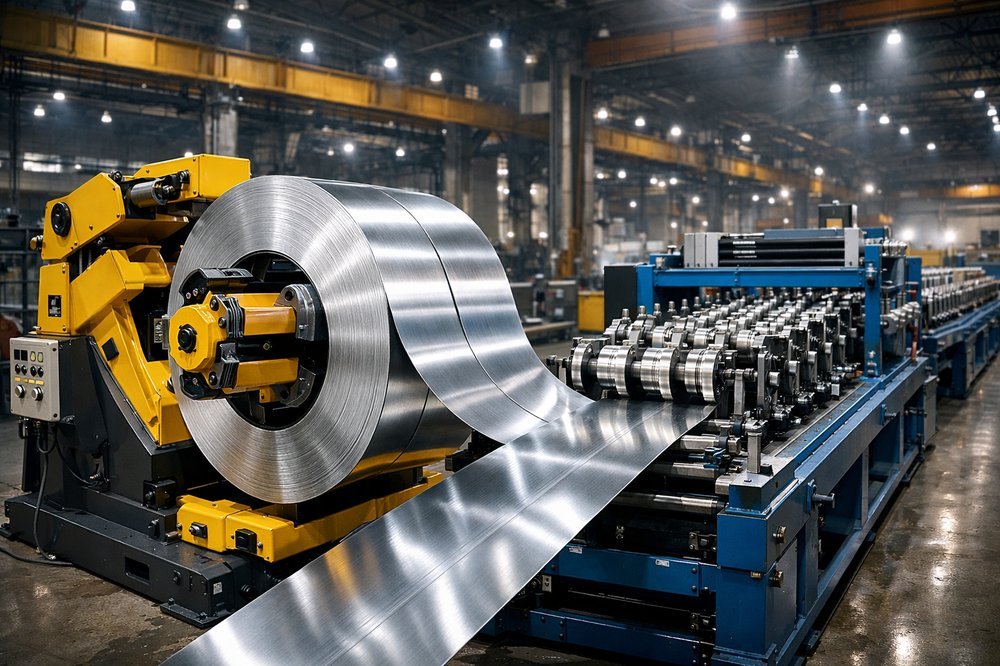 Figure 3: High-capacity automatic decoiler smoothly feeding galvanized steel coils into the roll forming entry guide.
Frequently Asked Questions (FAQ)
Q1: Can I roll form regular spangle steel without damaging my rollers?
Yes. If you must use regular spangle coils due to cost constraints, ensure your roll forming machine utilizes premium-grade rollers (such as GCr15 or Cr12MoV) hardened to HRC 58-62 and chrome-plated. Additionally, applying dedicated forming lubricants can significantly reduce friction and prevent zinc pickup on the rolls.
Q2: Why is zero spangle steel preferred for pre-painted panels (PPGI)?
The paint layer on PPGI is extremely thin. When regular spangle is painted, the underlying crystal boundaries show through, creating a rough and aesthetically unpleasing finish. More importantly, during roll forming, these rigid crystal boundaries act as stress concentrators, causing the paint to crack (micro-cracking) and exposing the steel to early corrosion.
Q3: How is zero spangle steel produced in the mill?
Zero spangle steel is produced either by using a pure zinc bath with extremely low levels of lead and antimony (preventing crystal nucleation), or by rapidly cooling the molten zinc with water-spray, steam jets, or solid nucleating dust immediately after the steel strip exits the galvanizing bath.
Conclusion & Next Steps
Choosing the right galvanized steel substrate is a vital step in optimizing your roll forming line's performance and output quality. While regular spangle steel offers a cost-effective solution for unpainted, heavy-duty structural parts, zero spangle steel remains the undisputed choice for high-precision, prepainted, and aesthetically critical cladding and roofing panels.
If you are facing roller wear, paint cracking, or are unsure how to adjust your machine settings for specific steel grades, contact our expert engineering team at ZHONGYUAN today. We specialize in custom-engineered roll forming machines designed for maximum tool longevity and zero-defect production. You can also explore our advanced roll forming machine line-up to see our tooling specifications.